Computerworld is reporting Apple’s having the most success selling to businesses since the late 80’s:
In a just-published survey, 68% of some 700 companies polled said they will allow their end users to deploy Macs as their work systems in the next 12 months. That’s exactly double the percentage of businesses that answered the same question eight months ago, said Laura DiDio, an analyst at Information Technology Intelligence Corp. (ITIC).
“And Apple hasn’t done anything to actively promote this,” DiDio said. Instead, faced by users “begging to use a Mac,” IT managers are reacting to the “consumerization” of technology in the enterprise, she explained.
“It used to be that business computers were more powerful than the ones at home,” DiDio noted, “but just the opposite is happening now. The computers at home are more powerful than those in the office.” And users want that power where they work.
It’s about time! People love their Apple products — whether they be iPhones, MacBooks, iMacs or iPods (they’re actually little computers, too). Since so many now have Apple products at home, they want “the good stuff” at work.
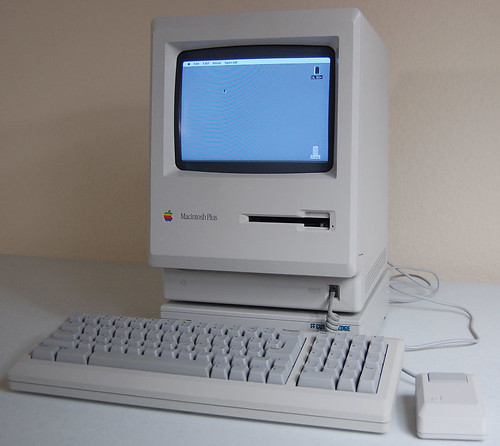
I still have my Macintosh Plus — can’t part with it as it’s almost an antique. In fact, I was using it for creating and editing Quark XPress documents up until 1995. It wasn’t easy working with that small screen, but it worked! Got an iMac a while back (G3), and we’re about ready for an upgrade, with iPhones for the whole family. How can we afford it? Perhaps the $99 iPhone rumors are true after all. Talked to an AT&T rep at a Walmart this afternoon and he was coy about it (“…after the New Year, you never know…”).
0

So while I worked at SES AMERICOM, getting their IPTV service off the ground was one of the projects I was particularly proud of. A completely new service, it is technically sound and backed-up by some of the finest people in the video distribution business. We branded it IP-PRIME® and sold it to telcos who needed video services to compete with cable, who was going after their customers with voice and data services.
After three years of, in my opinion, decent marketing efforts, it seemed it was picking up steam and rolling on down the line. Only last week, Telephony wrote about the company’s positive outlook:
SES Americom’s content aggregation business continues to thrive in the face of an economic downturn, buoyed by demand for high-definition television and long-term relationships with programmers, chief financial officer Robert Kisilywicz told attendees at UBS’s annual global media and communications conference held this week in New York City.
The wholesale distributor, which announced at TelcoTV that it had signed up 65 total telcos in 31 states to its IP Prime platform, will launch 13 new satellite programs in the next three years, adding more than 28% growth in its transponder business. Kisilywicz said it has no liquidity concerns and will remain fully funded through 2010. Also helping the financial outlook is the fact that SES customers typically sign 10- to 15-year non-cancelable contracts, giving the company long-term visibility.
“When a customer makes a buying decision, it’s typically a long-term relationship,” Kisilywicz said. “As that platform grows, as they add subscribers and, in turn, more channels, customers want to sign on with operators who have the capacity to grow with them…They don’t want to be turned away when they reach growth capacity or be told to repoint their network. That puts SES in quite a good position as some of our competitors are withdrawing their fleets in the market.”
When I read that, I thought “great,” the service will succeed and I’ll be proud. This morning, however, I’m inclined to say I saw that train coming. SES says it’s time to change tracks:
SES AMERICOM today announced that it will cease providing its IPTV service in North America – IP-PRIME – by July 31, 2009. The termination of the service is motivated by the slow adoption of IPTV by small and medium size telecom operators as well as by the difficult market outlook for this kind of service.
“In line with its plan, IP-PRIME has contracted IPTV signal delivery agreements with 70 small telecom operators, of which 37 have so far reached commercial stage. However, with a subscriber base of less than ten thousand at the end of November and after more than 2 years of service, the consumer uptake is insufficient to justify continuing operations,” said Rob Bednarek, President and CEO of SES AMERICOM-NEW SKIES.
Too bad; hope they find somebody to continue the service beyond July of 2009.
0