Author: Andy Tytla

Published: 237 articles

Firetruck

You can only control so much of what your kids see and hear. Once they’re in school, your kids’ vocabulary gets mashed up with others, resulting in, for example, first graders learning “firetruck” is a substitute or code word for “the F word.”

How and where do 1st and 2nd graders get that? At home?

Yes, I’ve changed. Parenting will do that to you. Indecent language is an interesting topic and it concerns the highest court in the land — and Rupert Murdoch.

The case before the Supreme Court (FCC v. Fox Television Stations, 07-582) had this ruling being issued recently, as reported by TV Newsday and the AP:

The Supreme Court ruled narrowly Tuesday in favor of a government policy that threatens broadcasters with fines over the use of even a single curse word on live television, yet stopped short of deciding whether the policy violates the Constitution.

In six separate opinions totalling 68 pages, the justices signaled serious concerns about the constitutionality of the Federal Communications Commission’s “fleeting expletives” policy, but called on a federal appeals court to weigh whether it violates First Amendment guarantees of free speech.

Yes, the FCC rules over broadcast television and radio. Kids watch TV and listen to the radio (mine listen to satellite radio in the car, but I know which stations to avoid and which are “safe”). They’ll hear the bad words from others, but not at home. There are no “fleeting expletives” here.

Well, guess what? My kids are on the Internet, doing searches. We watch what they do and where they go, but it only takes a few seconds to click on an “indecent” link. I think “decency” varies from one culture to another, and, as any anthropologist will tell you, culture is always changing, adapting, evolving.

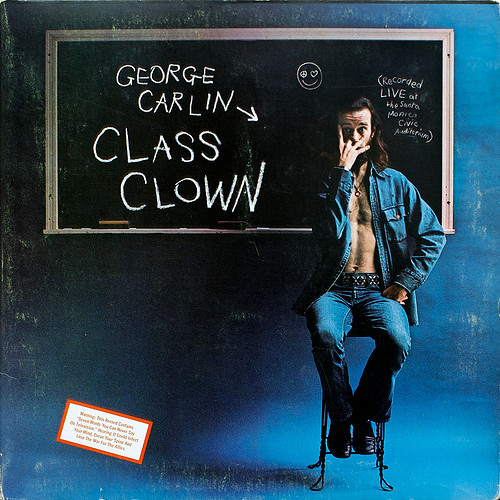
I was listening to George Carlin’s “Class Clown” album at age 12 (with my brother, who was 9 at the time) at my neighbor’s, who had older siblings. It was their record and we got a kick out of the “seven words you can’t say on television.” See that? That was 35+ years ago. Think it’s easier now? Hardly.

Personally, ads for ED drugs and some personal care products don’t belong on TV between 6:00 a.m. and 10:00 p.m.
1

Portfolio P&L: $100 Million Loss

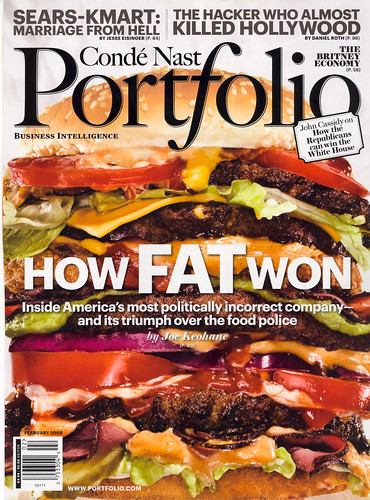
Condé Nast’s business-with-style magazine, Portofolio, is going away forever, via BtoB:

Condé Nast dropped a long-anticipated ax on Condé Nast Portfolio this morning, shutting down the expensive, ambitious effort to build a business magazine with a stylish presentation, according to a report by Advertising Age, a BtoB sibling publication.

The move affects more than 85 employees, already down from a peak of 140 after a retrenchment last November, including Editor in Chief Joanne Lipman and Publisher William Li, who are both leaving the company.

The last issue of Portfolio is on newsstands now.

Condée Nast is closing the Portfolio.com Web site as well, although there are discussions inside the company about eventually reviving it in some way.

The news seemed to emerge first on Twitter, where All Things D blogger Peter Kafka posted word Monday morning.

David Carey, the group president and publishing director who launched Portfolio two years ago, called the decision to give up an agonizing one.

“I just left the staff meeting,” he said. “This is a business that we have liked being in. We are proud of the product, which is nominated for three Loeb awards.”

The economy’s collapse, however, cut both ways—ultimately for the worse. It heightened interest in the economy, but it also submerged five categories of advertising on which Portfolio depended: financial services, corporate branding, business travel, auto and luxury.

“Even if the economy starts to recover, it’s likely the advertising is going to lag it,” Carey said. “The gap between where we needed the business to be in 2010 and 2011 proved to be too large.”

Although Lipman in particular received regular criticism on blogs such as Gawker and in the pages of the New York Post, Carey said he admired the Portfolio team, which at one time included a raft of famous writers.

When this book was first introduced via a Sunday press release in June of 2006, I thought it was going to be near impossible to make room for another business magazine.  Business Week, Fortune and Forbes — those are the big three. Inc. and Fast Company come to mind as the “others.” But maybe they can make a go of it. Remember: Business Week started publishing just as the stock market crashed in 1929. Now they’re arguably the most successful business magazine around (disclosure: I’m a regular reader).

The observation from Tech Crunch is spot-on:

Portfolio saw itself in the same vein as the Fortune magazine of the 1930s, filled with lush photographs and long narratives. But that formula doesn’t work in an age where business is about speed, not leisure or luxury. It also doesn’t work in an age where monthly magazines in general are increasingly challenged by the wealth of instantaneous business news available on the Web. (And you thought the daily newspapers had it tough). Portfolio’s insistence on favoring its print over its Website content also helped to hasten its demise. If you are going to start a magazine these days, the Website has to come first. The magazine companies still don’t realize this simple fact.

How much longer will the other “glossy” magazines in the Condé Nast newsstand survive without any advertising growth?

2